Horizontal Stripes Make Things Taller. Vertical Stripes Make Things Wider.
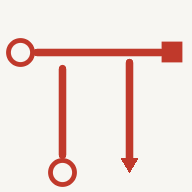
Which line/shape is bigger?
You are looking at the Helmholtz squares illusion, described by Hermann von Helmholtz in his 1867 Handbuch der physiologischen Optik. Two squares · geometrically identical · one filled with horizontal stripes, the other with vertical stripes. The horizontally-striped square looks taller than it is wide. The vertically-striped square looks wider than it is tall. The effect is small but reliable, and it reverses what fashion intuition tells you about stripes.
What you are about to learn. What the illusion actually is, why Helmholtz got the “wrong” answer that fashion conventional wisdom refuses to accept, the long and surprising debate over whether horizontal stripes really are slimming, what the data say, and the role of line-repulsion in explaining why stripes stretch in the direction perpendicular to their orientation.
What the Illusion Looks Like
Take two squares of identical size. Fill the first with horizontal stripes · thin lines running left to right. Fill the second with vertical stripes · thin lines running top to bottom. Hold them side by side.
The horizontally-striped square appears elongated in the vertical direction · taller than wide. The vertically-striped square appears elongated in the horizontal direction · wider than tall. Measure them both and they remain the same square.
The minimal recipe. A square outline plus parallel lines running in one direction. The stripes need only be close together and evenly spaced. The magnitude of the effect is small · typically 3 to 6 percent · but it is reliable and has been replicated dozens of times since Helmholtz.
The Fashion Contradiction
Here is where it gets genuinely strange. Popular wisdom, and a long tradition of fashion advice, holds that vertical stripes are slimming · they make the wearer look taller and narrower. The Helmholtz illusion, applied directly, suggests the opposite: vertical stripes should make the wearer look wider.
Which is right? It turns out the answer depends on what you are measuring and how the stripes are drawn.
Helmholtz’s finding in the lab. Horizontal stripes make a square look taller, vertical stripes make it look wider. This has been replicated many times with simple geometric stimuli.
The fashion context differs. A human figure is not a simple square. It is a complex shape with curvatures, context (the unstriped background wall, other bodies nearby), and spatial assumptions. Vertical stripes on a torso interact with the body’s outline in ways a simple square does not.
Modern psychophysical studies on full-body figures have found that the Helmholtz result often still applies: horizontally-striped figures look slightly taller and slightly slimmer than vertically-striped equivalents. Peter Thompson at the University of York has published the cleanest recent data on this, and they broadly support Helmholtz over the fashion industry.
Common misconception: “vertical stripes are slimming.” Controlled studies since 2008 have repeatedly shown that horizontal stripes are slightly slimming on human figures, not vertical · exactly as the Helmholtz illusion predicts. Fashion wisdom has the direction backwards. The margin is small (a few percent), and individual clothing cut and context matter more than stripe direction, but at a pure pattern level the Helmholtz wins.
Why It Works
The dominant account is edge repulsion (sometimes called “line repulsion”).
Your visual system’s orientation-sensitive neurons, discovered by Hubel and Wiesel in cat primary visual cortex in 1959, respond to edges at specific orientations. Adjacent neurons that prefer similar orientations inhibit each other. The net effect: when a region is packed with, say, horizontal edges, the visual system’s orientation-sensitive representation becomes saturated with horizontal, and any non-horizontal feature in the region gets pushed outward in its apparent position.
Repulsion in direction perpendicular to stripes. A square’s top and bottom edges are horizontal. Fill the interior with horizontal stripes and those interior edges do nothing to repel the top and bottom edges (they are the same orientation). But the square’s left and right edges are vertical · and all that interior horizontal-edge activity pushes their apparent positions outward. Wait, that would stretch the horizontal-stripe square horizontally, not vertically. The Helmholtz-predicted direction is the opposite. So edge-repulsion alone does not cleanly explain the result.
The modern account is more subtle: the repulsion is not of the square’s outer edges, but of the gaze across the figure. Scanning along the axis perpendicular to the stripes requires crossing every stripe as a visual target; scanning along the axis parallel to the stripes requires no target-crossing. The perpendicular axis therefore accumulates more saccades and more perceptual events · the Oppel-Kundt mechanism in action · so it reads as longer.
Helmholtz squares as a spatial Oppel-Kundt. Fill a span with features and it feels longer; fill the perpendicular axis with features and the parallel axis feels longer by elimination. This is why the effect runs perpendicular to the stripes rather than parallel: scanning across the stripes generates events, scanning along them does not. It is the same underlying mechanism as in the tick-mark illusion, applied to a 2D figure.
The Magnitude, Replicated
Peter Thompson’s 2008 paper “Horizontal stripes are not slimming” · a title deliberately provocative because the published literature had pulled the opposite direction for decades · re-ran the experiment with carefully controlled full-body mannequins and found the classical Helmholtz direction held up.
Effect sizes: 2 to 6 percent on simple square stimuli, 1 to 3 percent on human-figure stimuli, always in the Helmholtz direction.
Why the fashion myth persists. Even in the face of the data, “vertical stripes are slimming” is such an entrenched cultural belief that correcting it feels counterintuitive. Part of the reason may be that the illusion is small enough that individual fabric cut, fit, and tone dominate the total perceptual result. Another part is that vertical lines draw the eye upward, which observers then conflate with “tall and slim” · but the underlying spatial bias is the reverse.
A Harder Variant
Below is the Helmholtz figure at difficulty 3 · the stripes are sharper and the contrast is cleaner. The two squares are still exactly the same size.
Which line/shape is bigger?
Cover half the figure. Cover the vertically-striped square with a piece of paper. Now just look at the horizontally-striped square. On its own, in isolation, it still looks slightly taller than wide · proof that the effect is not purely relative but has an absolute component. Uncover the other square and they settle into the side-by-side comparison we started with.
Where Helmholtz Lives in the World
- Textile and fashion design. Much of modern stripe-wearing advice is, empirically, wrong. But the cut and tonal balance of the garment matter vastly more than the stripes themselves, so the bad advice rarely hurts anyone.
- Architecture. Horizontal cladding on a building (horizontal slats, horizontal windows) makes the building look taller; vertical cladding makes it look wider. Architects choose the cladding direction deliberately.
- Interior design. A room with horizontal wall stripes (chair-rail trim, a wallpaper with horizontal bands) will feel taller than the same room with vertical stripes. Restaurant designers use vertical stripes in narrow rooms to widen them, and horizontal stripes in low-ceilinged rooms to lift them.
- Screen design. A rectangular card or container with horizontal grid lines looks taller than the same container with vertical grid lines. Mobile card layouts tend to use horizontal separators for exactly this reason · it visually elongates the scroll feed.
Test Yourself on 50 More Illusions
The Helmholtz Squares is one of more than 50 classical illusions on PlayMemorize. Each round draws a deterministic SVG scene and asks one grounded question: which is larger, which is brighter, which is actually parallel. The reveal overlay shows the true geometry plus a one-line “why it works” caption.
- Keep playing Helmholtz Squares → · the standalone game, pinned to this one figure with fresh seeds each round
- Play Illusions → · spot the tricks across size, colour, orientation, and impossible figures
- Play Spatial → · train mental rotation and area estimation
- Play Matrix → · abstract pattern reasoning under time pressure
The takeaway. The Helmholtz squares illusion is a modest but stubborn reminder that texture inside a shape leaks out into the shape’s perceived boundaries. Fill a region with lines, and the region swells in the direction perpendicular to those lines. The same mechanism stretches buildings, elongates rooms, and · against what any fashion magazine will tell you · makes horizontally-striped clothing look slightly slimming. It is one of the oldest size illusions still defying common intuition.
Illusions
Your eyes lie - the math knows the truth. Spot equal lengths, identical greys, and truly parallel lines across 57 classic optical illusions
Play now - it's freeNo account needed. Works on any device.